Did you know that the first 24 hours after a leak determine whether your home recovers or becomes a permanent breeding ground for toxic mould? Watching water soak into your expensive wool carpets is a nightmare, and the fear of rising costs or contaminated "black water" is enough to keep any homeowner awake. If you are standing in a flooded hallway right now, you need more than just a mop; you need a plan that works. We understand the panic that sets in when the River Gipping overflows or a pipe bursts unexpectedly. You want your home dry, safe, and sanitised without the hidden costs or the usual industry drama.
This guide provides a professional, step-by-step recovery checklist for emergency water damage restoration that adheres strictly to the PAS 64:2013 code of practice. We’ll show you how to mitigate immediate damage, salvage high-value rugs, and navigate insurance claims that can range from £200 for minor repairs to over £10,000 for major structural restoration. By following this expert-led process, you can secure your property and ensure a "no shortcuts" restoration that protects your family and your investment. No drama. Just honest, skilled work to get your home back to normal.
Key Takeaways
- Learn the vital safety protocols for the first 60 minutes, including how to isolate mains electricity and stop water ingress at the source.
- Discover why categorising water as white, grey, or black is the only way to determine the correct sanitisation and drying strategy for your property.
- Secure your home by following a professional extraction checklist for emergency water damage restoration that targets deep-seated moisture in carpet fibres.
- Find out how to vet local specialists using quality markers like Woolsafe approval to guarantee your high-value carpets receive expert, independent care.
- Implement a “no shortcuts” recovery plan that simplifies the restoration process and ensures your home returns to a safe, fresh condition without hidden drama.
Table of Contents
-
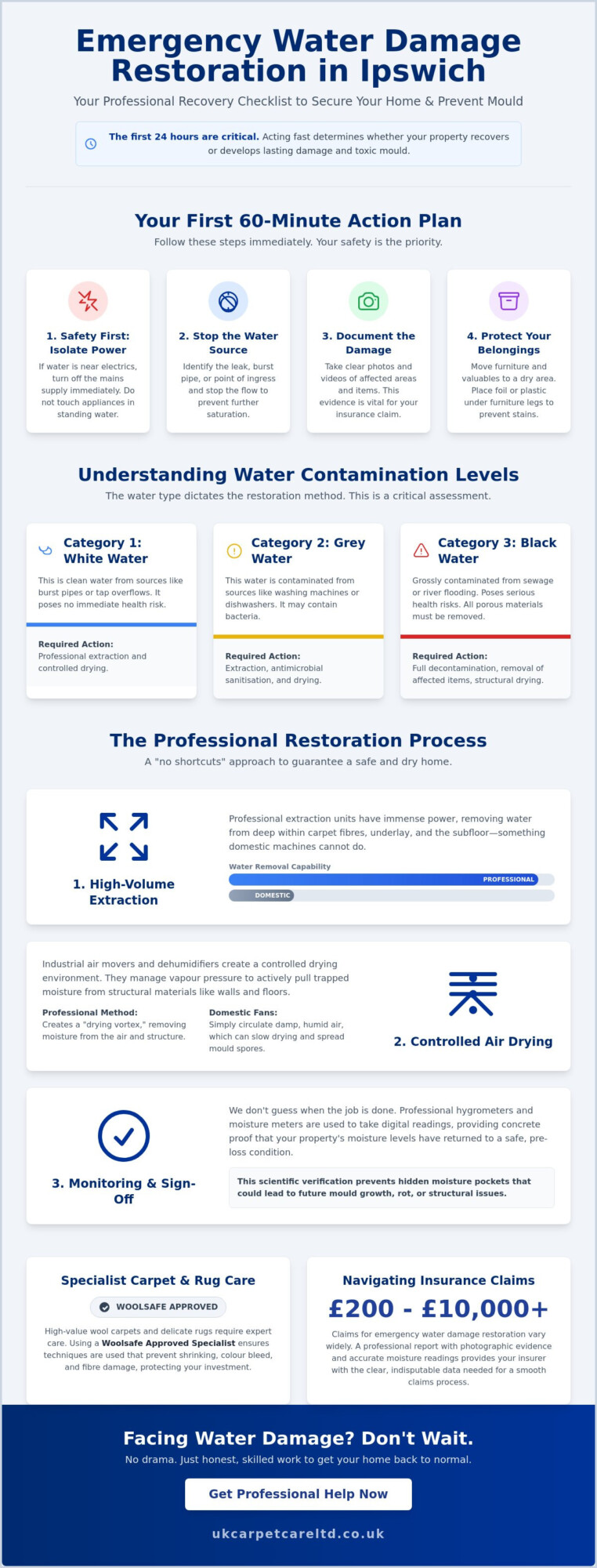
Emergency Water Damage in Ipswich: Your First 60-Minute Checklist
-
Professional Flood Damage Repair: The Extraction & Drying Checklist
-
Vetting an Ipswich Restoration Specialist: The Quality Checklist
Emergency Water Damage in Ipswich: Your First 60-Minute Checklist
When you discover standing water in your home, the clock is already ticking. Panic often leads to shortcuts, but a methodical response in the first hour can save your carpets and your sanity. Your first priority isn’t the mop; it’s your safety. If water is anywhere near electrical sockets or appliances, go straight to the mains and isolate the power. Don’t take risks with wet floors and live electricity. Once the area is safe, identify the source. Whether it’s a burst pipe under the kitchen sink or a sudden Suffolk weather event, you must stop the ingress immediately to prevent further saturation.
Once the flow stops, document everything. Take clear photographs of the standing water, the affected furniture, and the point of entry. This evidence is vital for your insurance claim. Understanding What is Water Damage? is essential, as different sources require different levels of sanitisation. After documenting the scene, contact a specialist for emergency water damage restoration. Professional extraction units are far more powerful than domestic vacuums and are necessary to pull moisture from deep within the carpet pile and subfloor. No drama. Just immediate, effective action.
Safety and Damage Mitigation Steps
If the water source is unknown or looks discoloured, wear rubber boots and gloves. Contaminants can soak into skin quickly. To protect your belongings, lift furniture legs onto foil or plastic blocks. This simple step prevents wood stains and "bleeding" dyes from ruining your carpets. Move delicate items, such as hand-knotted rugs or electronics, to a dry, unaffected floor. If a rug is already wet, don’t roll it up; lay it flat on a clean, dry surface to prevent colour run.
Local Ipswich Emergency Contacts
It’s important to know who to call. If there’s an immediate threat to life or a risk of structural collapse, contact Suffolk Fire and Rescue. For property recovery and extraction, call a professional restoration firm. If you live near the River Orwell or River Gipping, check the Environment Agency’s local flood alerts. They updated their climate change allowances for peak rainfall in May 2022, providing more accurate risk data for Ipswich residents. Staying informed helps you stay protected.
Professional Flood Damage Repair: The Extraction & Drying Checklist
Once the immediate crisis is contained, the technical phase of emergency water damage restoration begins. This isn’t a task for a standard wet-and-dry vacuum. We start by categorising the water to determine the necessary sanitisation level. Category 1 (White water) comes from clean sources like burst pipes, whilst Category 3 (Black water) involves sewage or river flooding from the Orwell or Gipping. Each requires a bespoke approach. If the water is contaminated, we apply professional-grade antimicrobial treatments to ensure the property is safe and sterile before the drying process even starts.
The next step involves deploying high-volume water extraction units. These machines are designed to pull liquid from deep within carpet fibres and underlay, far exceeding the capabilities of domestic equipment. Following the EPA’s Flood Cleanup Guidance is vital here to protect indoor air quality and prevent secondary damage. After extraction, we install industrial dehumidifiers and air movers. These units work in tandem to pull moisture from subfloors and walls, creating a controlled environment that encourages rapid evaporation. No drama. No shortcuts.
The Science of Professional Drying
Domestic fans are insufficient because they merely move damp air around the room. Professional drying relies on controlling vapour pressure to "draw" moisture out of structural materials. We often utilise "in-situ" drying techniques, which allow us to save high-value carpets without lifting them, provided the water is Category 1. To ensure total success, we organise follow-up inspections using professional hygrometers. These tools provide digital confirmation that moisture levels have returned to normal, leaving nothing to chance.
Specialist Rug and Upholstery Care
Delicate items require a master craftsman’s touch. We use Woolsafe approved techniques to restore wool carpets and Persian rugs, ensuring that fibres are cleaned and dried without shrinking or colour bleed. High humidity also affects curtains and leather furniture, which may require specialised professional upholstery cleaning to prevent mould spotting. It’s just honest, skilled work from people who know how to handle complex fibres under pressure. This methodical approach ensures your home is not just dry, but truly restored.
Vetting an Ipswich Restoration Specialist: The Quality Checklist
Choosing a partner for emergency water damage restoration shouldn’t be a gamble. Whilst national franchises often dominate search results, they frequently lack the nuanced understanding of Suffolk’s diverse architecture, from Victorian terraces near Christchurch Park to modern waterfront apartments. You need an independent, local business. This ensures you’re talking directly to the person responsible for the work, not a call centre operator hundreds of miles away. Local experts rely on their reputation within the community, which naturally leads to higher standards and greater accountability.
Quality markers are non-negotiable when your home’s structural integrity is at stake. Always check for specialist certifications, particularly Woolsafe approval if you have high-value carpets or rugs. This accreditation proves the technician understands fibre chemistry and won’t damage your flooring with aggressive, incorrect treatments. A reliable master craftsman operates with a "No Drama" guarantee. This means transparent pricing and a commitment to the "job done right" mentality. No shortcuts. No hidden fees. Just a straightforward path to getting your property back to its original condition.
Why Local Independence Matters in Suffolk
Local independence means you get straight-talking advice from experts who know Ipswich property types inside out. You aren’t just another job number on a corporate spreadsheet; you’re a neighbour. Having direct access to the business owner provides a level of peace of mind that a faceless franchise simply cannot match. For honest, skilled emergency restoration in Ipswich, contact UK Carpet Care Ltd today.
Insurance and Documentation Requirements
Your insurance company requires more than just a basic receipt to process a claim. A professional restoration quote must provide a detailed breakdown of the extraction, drying, and sanitisation phases. We provide comprehensive reports including digital moisture readings taken with professional hygrometers. These readings are essential for validating a "dry" certificate, proving that your subfloors and walls have reached safe levels. This documentation is your best defence against future mould claims and ensures your insurance payout is handled correctly. It’s just honest, skilled work from people who know what they’re doing.
Following the drying phase, it is common to discover minor structural erosion or cracks in concrete subfloors; in such instances, you can check out RBMB for high-performance cement-based repair mortars to complete the restoration.
Securing Your Home’s Future After a Flood
The first hour of a flood is the most stressful, but following a structured plan turns a potential disaster into a manageable recovery. By prioritising electrical safety, stopping the water source, and utilising industrial-grade extraction, you prevent the long-term structural issues that often follow poor drying. Remember that domestic fans cannot reach the moisture trapped in your subfloors; only specialist equipment and scientific drying methods can truly protect your property from secondary damage.
When you need emergency water damage restoration, choosing a local partner is the smartest move for your home and your insurance claim. UK Carpet Care Ltd has been family-owned and independent since 2007, providing the specialised care that faceless franchises often miss. As Woolsafe Approved Specialists, we know how to salvage your most valuable rugs and carpets without causing further damage. Request Emergency Water Extraction in Ipswich Now for a "No drama. No shortcuts" approach to your recovery. Just honest, skilled work from people who know what they’re doing. You can get your home back to normal, and we are here to help you do it right.
Frequently Asked Questions
How quickly can you attend a water damage emergency in Ipswich?
We aim to be on-site within 2 to 4 hours of your initial call for any emergency water damage restoration. Rapid response is critical because mould spores can begin to colonise damp organic materials in as little as 24 to 48 hours. Being local to Suffolk allows us to bypass the logistical delays faced by national firms, ensuring extraction begins before permanent damage sets in.
Is my carpet salvageable after a flood or major leak?
Most carpets are salvageable if the water is Category 1 and professional extraction starts within the first 24 hours. If the underlay is completely saturated, it often requires replacement to prevent odours; however, the face fibres can usually be restored. Our Woolsafe approved status means we have the technical skill to save expensive wool carpets that general cleaners might write off.
What is the difference between grey water and black water damage?
Grey water (Category 2) contains significant chemical or biological contamination, such as discharge from a dishwasher or washing machine. Black water (Category 3) is grossly contaminated and includes sewage or rising river water from the Gipping or Orwell. Whilst grey water requires deep sanitisation, black water poses severe health risks and often means porous materials must be disposed of for safety.
Will my home insurance cover the cost of professional water damage restoration?
Standard UK policies typically cover "escape of water" from burst pipes or failed appliances, but river flooding often requires specific flood insurance. We provide the PAS 64:2013 compliant documentation and moisture maps that loss adjusters need to approve your claim. This detailed reporting ensures the process is handled with no drama and no shortcuts regarding your payout.
If your insurance claim is delayed or doesn’t cover the full extent of the damage, I Need Cash can help you explore financial options like personal loans to ensure your restoration stays on track.
How long does the professional drying process typically take?
The drying phase usually takes between 3 and 5 days, depending on the thickness of the materials and the extent of the saturation. We use industrial dehumidifiers that must run 24 hours a day to maintain the correct vapour pressure. We don’t guess when the job is done; we use calibrated moisture meters to prove the property has reached its pre-loss dry standard.
Can I stay in my house whilst the restoration work is being carried out?
You can often remain in your home if the damage is localised and there are no electrical hazards or structural risks. It’s important to note that industrial air movers are noisy and produce a constant airflow that can be disruptive. If Category 3 black water is present, we advise vacating the property until the sanitisation and antimicrobial treatments are fully complete to protect your health.
Article by
Rob Reeve
Owner of UK Carpet Care