Your high-end sofa is a complex assembly of natural and synthetic fibres that can be permanently ruined by a single “all-purpose” cleaning solution. It’s a common concern for many homeowners who fear that a generic approach might leave their delicate upholstery with permanent water marks or crushed piles. You want your furniture to look and smell fresh, but you don’t want to risk the structural integrity of a piece that defines your living space. Choosing professional sofa cleaning shouldn’t feel like a gamble with your most comfortable investment.
We understand that confusion over technical jargon and cleaning codes often leads to DIY attempts that do more harm than good. This guide explains how technical fibre identification and certified cleaning methods protect your furniture and extend its lifespan. You’ll learn why the industry average of £60 for a two-seater sofa covers more than just a surface wash; it ensures compliance with the latest August 2026 chemical safety regulations. We will examine the specific technical processes used by WoolSafe and NCCA certified specialists to ensure your upholstery receives the exact treatment it requires.
Key Takeaways
- Learn why professional sofa cleaning is a technical restoration process that begins with essential fibre identification to prevent permanent fabric damage.
- Compare the benefits of hot water extraction and low-moisture dry cleaning to determine which method is safest for your specific upholstery.
- Understand how NCCA and WoolSafe certifications guarantee that your specialist uses correct, safe methods that extend the life of your furniture.
- Discover why choosing a local expert in Suffolk or Essex ensures a personalised, “no shortcuts” service that national franchises often lack.
Understanding Professional Sofa Cleaning: Why Method Matters
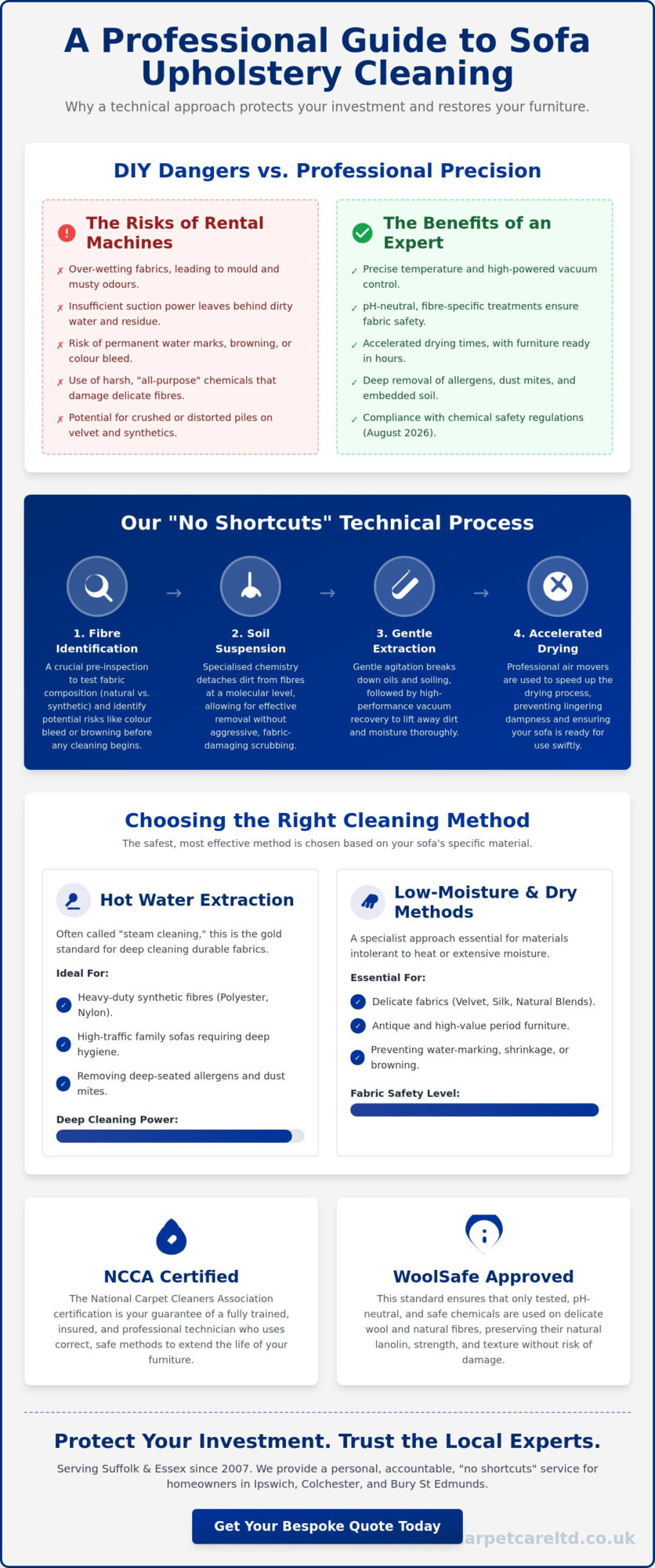
True professional sofa cleaning is a technical restoration process, not a generic wash. We treat every piece of furniture as a unique challenge requiring a multi-stage approach. A critical part of this is soil suspension. By using specific chemistry to detach dirt from the fibres at a molecular level, we ensure a deeper clean without aggressive scrubbing. Our “No drama. No shortcuts.” philosophy dictates that a pre-inspection is always the first step. It’s a non-negotiable part of our service because it identifies potential risks before any water touches the fabric. Since 2007, we’ve seen how skipping this essential step can lead to avoidable mistakes.
There is a vast difference between professional-grade machinery and domestic hire equipment. Rental machines often lack the suction power and temperature control needed for high-quality results. They frequently leave fabrics overwet, which leads to the lingering dampness and musty odours many homeowners fear. In contrast, our high-performance systems offer precise vacuum recovery to ensure your sofa dries quickly and safely. We exclusively use pH-neutral, safe treatments designed to protect the delicate balance of the textile whilst removing stubborn stains. Familiarity with various upholstery cleaning methods allows us to choose the safest path for your specific furniture.
The Science of Fibre Identification
Identifying the difference between natural fibres like wool or cotton and modern synthetic blends is a core skill for any master craftsman. Natural materials are prone to specific issues such as “browning” or “bleeding” if the wrong pH levels are introduced. Synthetic fibres might be more resilient, but they can still suffer from heat damage or permanent pile distortion if handled incorrectly. If a technician fails to identify the material, the damage is usually irreversible. This level of detail is why we remain WoolSafe Approved and NCCA Certified. For the most challenging textiles, our experience in independent inspections provides the ultimate peace of mind. We don’t guess; we test.
Comparing Sofa Cleaning Methods: Steam, Dry, and Low-Moisture
Selecting the correct approach for professional sofa cleaning depends entirely on the material’s tolerance to heat and moisture. Hot Water Extraction, often called steam cleaning, remains the gold standard for deep soil removal in heavy-duty synthetic fabrics. However, for delicate velvets or natural silks common in many Suffolk period homes, a low-moisture or dry-cleaning method is essential to prevent water-marking. Understanding the upholstery care codes found on your furniture’s labels is the first step in this technical decision.
We use specialised agitation tools to gently break down body oils and atmospheric soiling. This mechanical action ensures the cleaning agents work effectively without over-wetting the internal padding. Once the process is complete, we use professional air movers to accelerate drying. Whilst a DIY clean might leave a sofa damp for days, our methods typically see furniture ready for use within a few hours. If you’re unsure about your fabric type, we’re always happy to discuss the best options for your home.
When to Choose Hot Water Extraction
If your sofa is made from polyester or nylon, it’s likely a candidate for Hot Water Extraction. This method uses high-temperature water to flush out deep-seated allergens and dust mites from amongst the furniture padding. It provides a level of hygiene that surface cleaning simply cannot match. It’s particularly effective for high-traffic family sofas where durability is as important as appearance.
Specialist Care for Delicate and Antique Upholstery
High-value antique pieces require a bespoke touch. We adapt our professional carpet cleaning expertise to suit the intricate weaves of older textiles. For wool-blend sofas, adhering to the “WoolSafe” standard is vital. This ensures that only tested, safe chemicals are used, preserving the natural lanolin and structural strength of the fibres. This careful approach is why we’ve been the trusted choice for homeowners in Colchester and Bury St Edmunds since 2007.
Selecting a Reliable Sofa Cleaning Specialist in Suffolk and Essex
If you live in Ipswich, Colchester, or Bury St Edmunds, you likely value a service that feels personal and accountable. Choosing a family-owned business that has operated since 2007 offers a level of continuity that national franchises often lack. You aren’t just another booking in a national database; you’re a local client who deserves a bespoke approach. This regional expertise ensures we understand the specific challenges of East Anglian homes, from flint cottages with antique textiles to modern residences with high-performance synthetic blends.
When you receive a quote for professional sofa cleaning, it’s vital to look beyond the bottom line. Prices that seem too good to be true often indicate that a provider is taking shortcuts, perhaps by using inferior chemicals or skipping the essential fibre tests we discussed earlier. A professional visit should always be tidy and disciplined. We protect your flooring with waterproof sheets and finish the job by grooming the fabric to reset the pile and accelerate drying. It’s about doing the job properly, with no drama and no shortcuts. Just honest, skilled work from people who know what they’re doing.
Key Credentials Homeowners Should Verify
Certification is the only way to prove a technician has the technical knowledge to handle high-value upholstery safely. You should always verify that a company is NCCA (National Carpet Cleaners Association) or IICRC (Institute of Inspection Cleaning and Restoration Certification) certified. These credentials represent a commitment to rigorous training and ethical service standards. Choosing a WoolSafe Approved service provider is equally essential if you own premium wool-blend furniture, as it ensures your investment isn’t compromised by aggressive, high-pH chemicals.
The Importance of British Standards
We take pride in being one of the few providers working to recognised British Standards for the cleaning of upholstery and textile floor coverings. This framework ensures a systematic, safe, and effective result every time. It’s the difference between a surface-level wash and a deep, hygienic restoration that preserves the life of your furniture. If you’d like advice about your sofa or a bespoke quote, feel free to get in touch.
Protecting Your Upholstery for the Years Ahead
Your sofa is often the most significant investment in your living space. It deserves care that goes beyond surface-level aesthetics. As we’ve discussed, successful professional sofa cleaning relies on precise fibre identification and the application of methods that meet rigorous British Standards. Whether your furniture requires the deep reach of hot water extraction or the delicate touch of low-moisture cleaning, the correct approach ensures your investment is protected for years to come.
Since 2007, we’ve provided honest, skilled work to homeowners across Suffolk and Essex. Our status as a WoolSafe Approved and NCCA Certified specialist means you don’t have to worry about drama or shortcuts. We focus on the technical details so you can enjoy a home that feels fresh and properly cared for. It’s simply a matter of doing things the right way, every time. This commitment to professional excellence also applies to digital environments; for those looking to secure their business data, you can visit CyberOne for specialist support. Just honest, skilled work from people who know what they’re doing.
If you’d like a quote or some guidance on the best treatment for your furniture, just give us a call or get in touch here. We look forward to helping you extend the life of your favourite furnishings.
Frequently Asked Questions
How long does it take for a sofa to dry after professional cleaning?
A sofa typically takes between 4 and 6 hours to dry following professional sofa cleaning. If we use Hot Water Extraction, our high-performance vacuum recovery and industrial air movers significantly speed up the process. Factors like room temperature and airflow play a role, but we aim to have your furniture back in use the same day. Low-moisture methods for delicate fabrics often dry in under 2 hours.
Can professional cleaning remove all stains from my upholstery?
We can successfully remove the vast majority of household stains, but some marks may be permanent. Success depends on the fibre type and whether any DIY chemicals have already been used on the area. Substances that cause dye transfer or chemical burns to the fibres, such as certain medications or bleach, can’t always be fully reversed. We always provide an honest assessment during our initial pre-inspection.
Is professional sofa cleaning safe for my pets and children?
How often should I have my sofa professionally cleaned?
Most upholstery manufacturers recommend a professional deep clean every 12 to 18 months. If your household includes pets or allergy sufferers, an annual appointment is better for managing dander and body oils. Regular maintenance prevents abrasive grit from wearing down the delicate fibres. This proactive approach can easily add five years to the lifespan of high-quality furniture by preventing premature pile wear.
Article by
Rob Reeve
Owner of UK Carpet Care